




Yoga Center
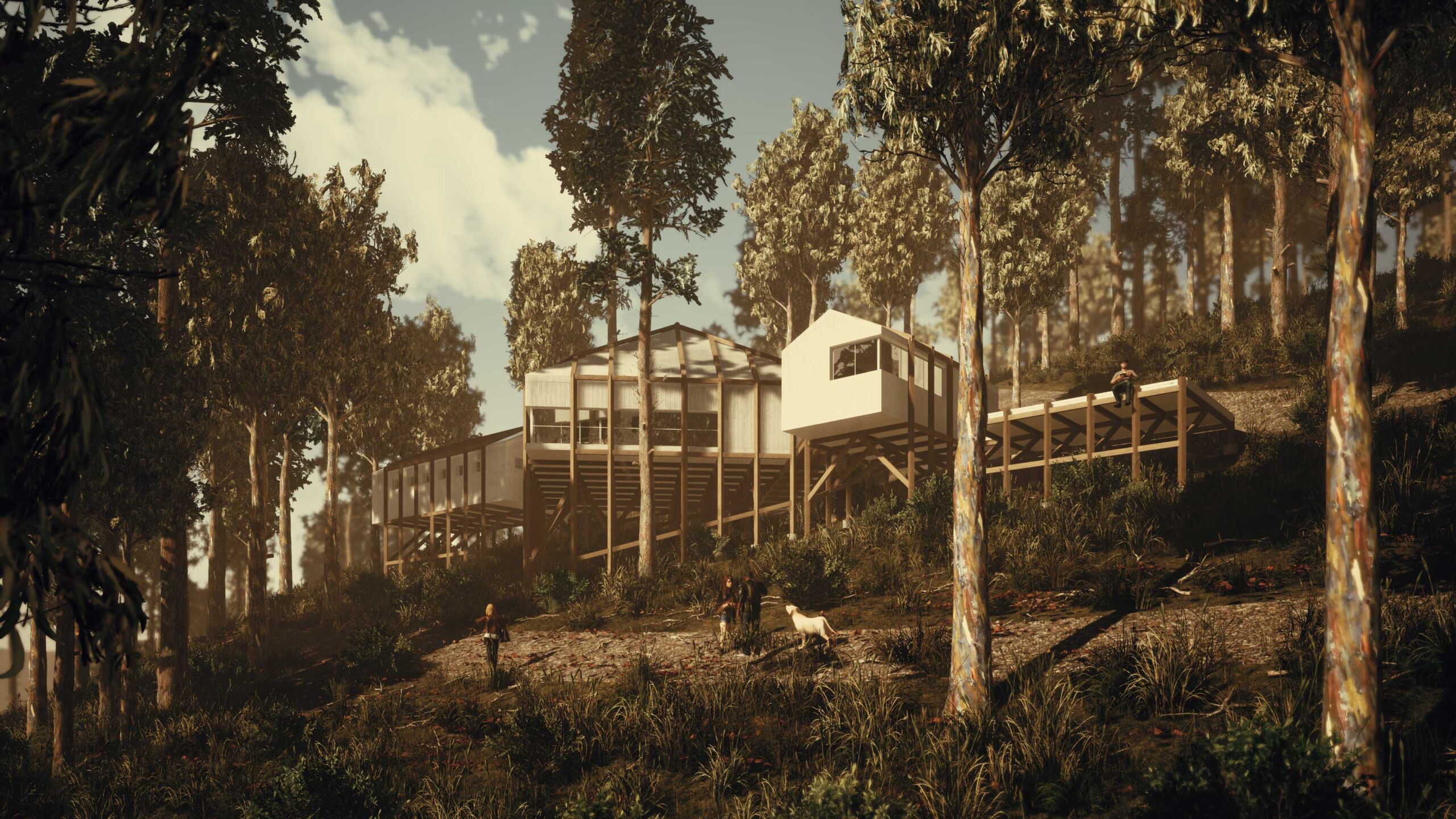
The Forestyoga studio is located on a secluded plot that slopes steeply down to a valley. The sharp incline from the road to the valley is such that it creates the illusion that the yoga studio floats above the hillside – a camouflaged object that seems to hover within nature. The integration of the studio into the landscape establishes a harmonious dialogue between the built and natural environments: similar colors and materials contrast with the sky, which serves as a backdrop.
The verticality of the building is created by elements resembling trees, supported by a simple peripheral structural system, positioned on the terrain like watchtowers or giant chess pieces. The idea is to overcome the obstacles imposed by the topography while emphasizing what it has to offer. The building evokes a fundamental architecture, where “humanity returns to its natural habitat.” The white boards that enclose the main program area possess an intense reflective quality, creating a strong visual contrast with the surrounding natural colors.
The dialectical relationship between the ‘open’ and the ‘closed’ is evident, where the functional division is reflected in the composition of both exterior and interior spaces. The private areas are enclosed in cellular spaces, while the area in contact with nature is expressed as a singular volume – exploring and practicing the concept of “Inside-Out Architecture.”
The program is divided into three main elements, connected by a peripheral pathway that takes the form of a suspended bridge. This path runs along the back of the volumes, away from the primary views over the hillside. This gesture humanizes the scale and intention of the project, creating a Zen garden in the midst of the backyard forest.
The first element – the Tea House and the entrance hall – is materialized as a horizontal platform dedicated to leisure, which can be used before or after a yoga session. It is covered with white-painted wooden boards to accentuate the purity of the space, serving as a transition point between the exterior and interior elements.
The second and main element – the yoga studio – is the archetype of the entire layout. It assumes a very clear and neutral position in relation to the surrounding space. The entire building maintains a continuous connection with nature. This connection is facilitated by sliding windows (1.20m in height) that expose and blend the yoga session with the outdoors through various senses: sight, hearing, smell, and touch.
The interior resembles a mystical space with high ceilings – it is fully lined with white-painted cork panels. This choice not only reflects a careful study of local materials but also takes advantage of their thermal and acoustic properties. The cork eliminates the need for mats, allowing people to simply lie down and contemplate the surrounding natural environment. The peripheral structure allows for a spacious and flexible interior that can easily adapt to various themes and types of yoga. A square-shaped volume within this space houses storage and technical areas.
The third element – male and female changing rooms with integrated showers – focuses on the intimacy and privacy that this space requires, with exposure to the outside only through small windows.
We can describe these three elements as complementary parts of a tree – trunk, branches, and leaves – that come together to form a unique and singular object.
Read more: New rules for building permits in 2026 | Stages of the real estate process